September 23, 2026
A tree can look perfectly healthy from the kitchen window while something underneath is going wrong. Crowns thin out slowly. Bark splits in places you never think to look. Roots fail in wet ground with no fuss at all. By the time the problem is obvious from the ground, the tree may already have lost much of its structural strength — which is exactly the point at which a chainsaw and a bit of confidence stop being enough.
What follows is a working checklist. It is roughly what a tree surgeon runs through in the first few minutes of an assessment, adapted so you can use it yourself. None of these signs is a diagnosis on its own. Two or three together, though, is a fair reason to pay for a professional opinion.
Leaves Give the Earliest Warnings
Start at the top and work down, using binoculars if you have them. A healthy crown is full for its species and the right colour for the season. You are looking for a change from the tree's own normal.
Small leaves on one side of a tree only often point to something below ground — root damage, compaction, a new patio, or a drainage trench cut too close. Yellowing between the veins while the veins stay green can suggest a nutrient problem or roots that can no longer take up what they need. Browning at the leaf margins in dry weather is often just drought stress, and most trees recover. Leaf drop in midsummer is not normal and is worth investigating.
Note the pattern before you note the symptom: one branch, one side, or the whole tree?
Chewing, Holes and Webbing
Chewed leaf edges, neat round holes, or leaves stripped down to a lace of veins usually mean caterpillars, beetles or sawfly larvae. Defoliation looks dramatic, but a healthy deciduous tree can often grow a second flush of leaves in the same season and carry on. The risk builds when it happens year after year, because the tree spends its reserves instead of storing them.
Also look for webbing, leaves rolled and glued together, and speckling on the leaf surface. Before reaching for a spray, identify what you are dealing with. Broad-spectrum insecticides kill pollinators and the predators that would otherwise be doing the work for you. If treatment is genuinely needed, timing matters far more than strength.
Trunk and Bark: Oozing, Cracks and Frass
The trunk is where quiet problems become visible. Work slowly around the tree and look again on the way back.
- Bleeding patches — dark, weeping areas on bark, sometimes with a sour smell. Often canker or internal decay.
- Fine sawdust — pale powder in bark crevices or heaped at the base of the trunk. That is frass, and it usually means borers are active inside.
- Round exit holes — roughly pencil-width, sometimes in rows. Something has been living in the wood.
- Fungal brackets — shelf-like growths on the trunk indicate decay within, not just on the surface.
- Loose or missing bark — dead bark over dead wood.
- Cavities and hollows — not always fatal, but they need someone who can judge how much sound wood remains.
Check the Base Properly
Pull back ivy and long grass from the root flare — the widening where trunk meets roots. You should see a flare, not a post. Soil or mulch piled against the trunk keeps bark permanently damp, which encourages decay. If the base is buried, mushrooms are clustered there, or the trunk sounds hollow when tapped, get it looked at.
Crown Dieback, Deadwood and Weak Unions
Some deadwood in a mature tree is normal. The question is where it is and how much. Dead limbs hanging over a path, driveway or play area are a genuine hazard, and they can drop on a still day with no warning at all.
Watch for dieback that starts at the tips of branches and works inward, and for dense tufts of shoots sprouting directly from the trunk or main limbs. That tufted growth is often a tree's response to stress — it is trying to replace lost leaf area. Also look at where main limbs meet. Two stems of similar size pressing together with bark trapped in the join form a weak union that can split years later.
When the Whole Tree Moves
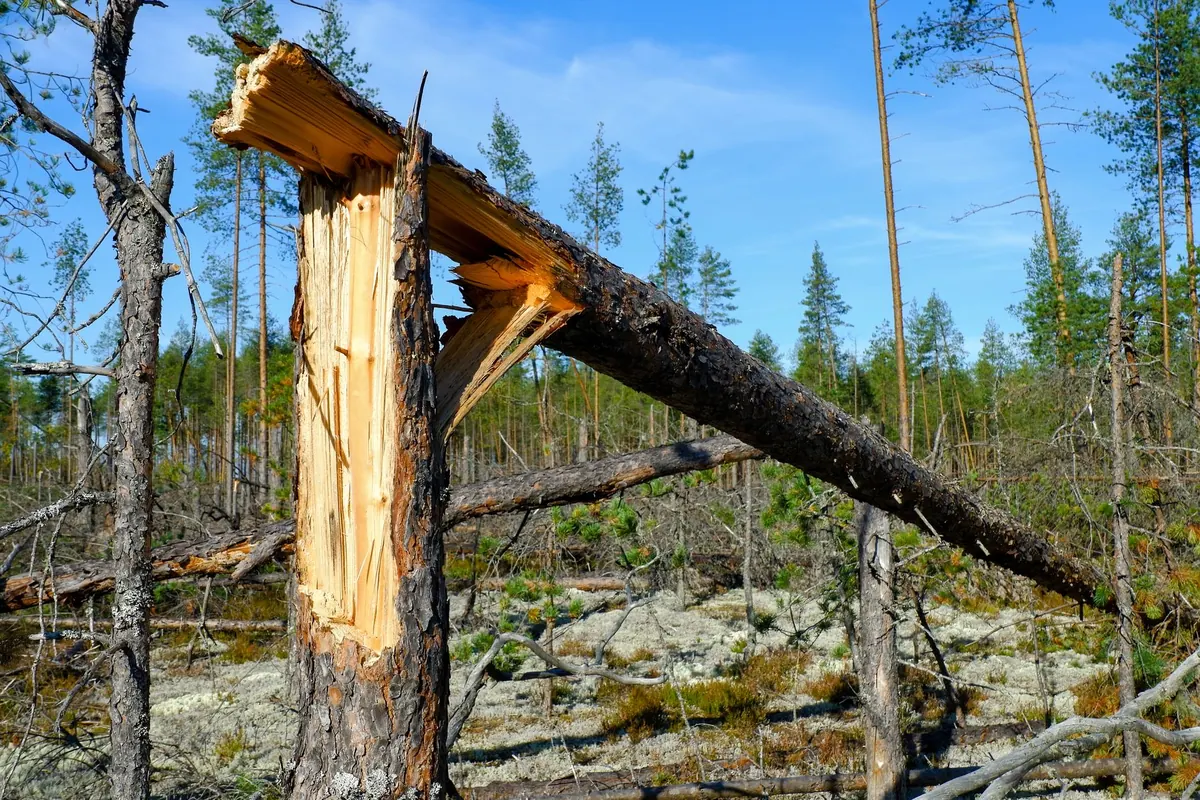
A new lean, cracks opening in the soil on the far side of the trunk, or ground lifting like a hinge near the base all suggest the root plate is failing. Treat that as urgent rather than interesting. Keep people and vehicles clear, do not park underneath, and ring a tree surgeon the same day. Wet, windy weather is when these trees come down, and the warning period can be short.
Photograph the tree from the same spot every few months. Decline is much easier to see in a sequence of pictures than in a single glance.
The Ten-Point Checklist
- Crown thinning, or dieback starting at the branch tips
- Leaves smaller, yellowing or dropping outside their normal season
- Chewed, holed or skeletonised foliage, webbing, or rolled leaves
- Sticky residue dripping from above, followed by black sooty mould on leaves and anything beneath
- Fine sawdust or frass around the base of the trunk or in bark crevices
- Bleeding, splitting or sunken dark patches on the bark
- Fungal brackets on the trunk, or mushrooms clustered at the base
- Cavities, hollows or soft, punky wood
- Dense tufts of shoots sprouting from the trunk or main limbs
- A new lean, soil lifting, or cracks in the ground around the roots
What to Do Next
If there is a risk to people or property, treat it as urgent. Fence the area off if you can, move cars, and keep children and pets away from underneath until someone qualified has seen it.
Before any work is discussed, check whether the tree is protected. Trees covered by a Tree Preservation Order, or standing in a conservation area, normally need consent or notification from the local council before pruning or felling — and that can include removing deadwood. Your council's tree officer can confirm the position, and it is worth an email rather than a guess.
When you call someone in, ask three things:
- What qualifications and experience do they have, and are they an accredited contractor? In the UK, Arboricultural Association Approved Contractor status is a reasonable benchmark.
- Do they hold public liability insurance, and can they show the certificate?
- Will the quote be in writing and itemised?
Get more than one opinion for anything significant. A good tree surgeon will tell you when a tree can be managed rather than removed, and will explain what they found and why it matters. Take close-up photographs, note the dates, and mention anything that has changed recently — a new driveway, building work, drainage, or a shift in the water table. Those details often explain more than the symptoms themselves.
And leave the climbing to them. Even a modest limb is heavy enough to cause serious injury, and the damage pests and decay leave behind is often invisible from the ground. For anything involving protected trees, boundary disputes or safety close to a public highway, take advice Photo: sergeispas / Pexels