September 13, 2026
An elm that looks full and green in June can be shedding brown, curled leaves by August, and standing dead the following summer. Dutch elm disease has done more to shape the British landscape than any other tree disease of the past century, and it has not gone away.
Knowing what to look for matters for two reasons. Acting early on one tree can protect the elms around it, and plenty of wilting elms are not suffering from Dutch elm disease at all.
How Dutch elm disease spreads
The disease is caused by a fungus, Ophiostoma, and it relies on elm bark beetles to get around. The larger and smaller elm bark beetles breed under the bark of elms that are dying or recently dead. When the new adults emerge, they fly to healthy elms and feed in the forks of young twigs. Fungal spores picked up in the breeding tree go with them, straight into the sapwood.
Inside the tree, the fungus grows through the water-conducting vessels. The elm responds by plugging those vessels to try to contain the infection, and that reaction is what causes the wilting. The tree is effectively cutting off its own water supply.
Beetles are only half the story. Elm roots from neighbouring trees commonly graft together underground, forming a shared root system. Once the fungus reaches the roots of an infected tree, it can pass through those grafts into a healthy tree several metres away with no beetle involved. This is why the disease so often appears in a cluster, working its way along a hedgerow or through a stand of elms one tree at a time.
The symptoms worth knowing
Symptoms usually appear between June and September, and they often start high in the crown on one side of the tree:
- Flagging. A few branches wilt while the rest of the tree looks normal. This is the earliest and most useful sign.
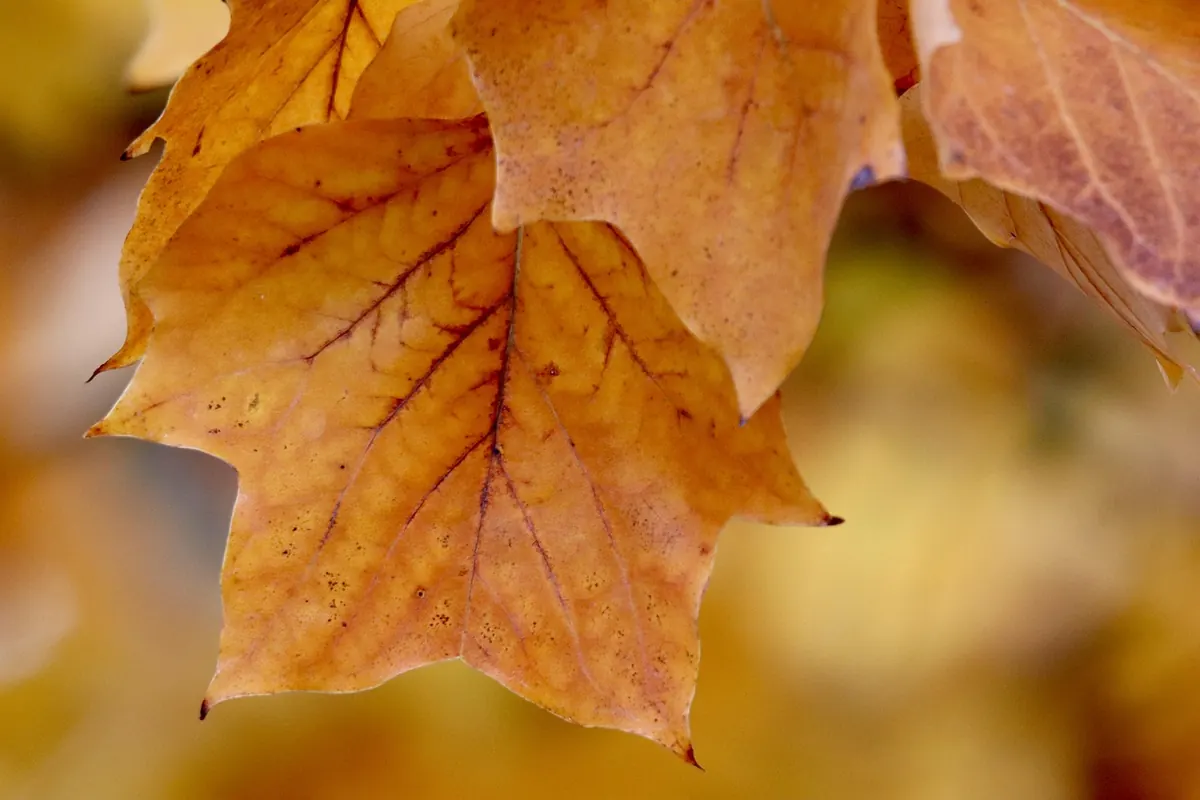
- Leaf colour change. Leaves turn dull green, then yellow, then brown. They tend to curl inwards and often stay attached to the branch rather than dropping.
- Downward spread. Browning moves from the branch tips inwards and from the top of the tree downwards, sometimes over weeks, sometimes over a full season.
- Hooked shoots. Young shoots can bend over into a shepherd's crook shape as they die back.
- A healthy base and sick crown. Root suckers around the base of an infected elm often keep growing while the crown above them dies.
Checking for the telltale streaking
Cut a symptomatic branch roughly pencil thickness or thicker, then peel back the bark. Healthy elm sapwood is pale. Dutch elm disease shows as brown or reddish-brown streaking in the outermost growth rings, often in a broken or patchy ring rather than a solid band. Repeat this on two or three affected branches; a single cut can mislead you.
Streaking is good evidence, not proof. Laboratory testing is available if you need certainty, and it is worth it before removing a large, healthy-looking elm on suspicion alone.
Lookalikes and other reasons an elm wilts
Verticillium wilt produces very similar wilting and sapwood staining, though the staining tends to be darker and greener. Drought, waterlogging, root damage and physical bark damage can all cause a tree to flag. Beetle feeding alone, without infection, causes minor twig dieback that looks alarming but does not usually kill a tree.
Elm yellows, a disease that affects elms in North America and parts of Europe, is not established in the UK and is not a realistic concern here. If you are unsure what you are looking at, ask someone qualified to look at the tree — your local council's tree officer or a qualified arboriculturist will often be able to identify the problem from a site visit.
When to act, and how quickly
Speed is everything with Dutch elm disease. Once an elm is infected, there is no cure. What you can do is stop it reaching the next tree. Two measures do most of the work:
- Break the root connections. Trenching between the infected tree and its neighbours severs the grafted roots, usually to a depth of about a metre. It only helps if it is done early, before the fungus has travelled far through the root system.
- Remove the tree and destroy the material. Sanitation felling means taking the tree out promptly and dealing with the timber properly. Chip it, burn it or debark it. Do not leave elm logs with the bark on sitting in a garden or yard — that is beetle nursery material.
Do not move elm timber or firewood out of an affected area. Bark beetles can travel in stacked logs, and that is one of the ways the disease reaches new places.
Fungicide injections are used in some countries on a small number of high-value elms as a preventive measure. They are not a reliable cure, they are not a standard option in the UK, and they need to be repeated. Speak to a qualified arboriculturist before considering anything of the kind.
A word on permission
Check whether the tree is protected by a Tree Preservation Order or stands in a conservation area before any felling. There are exemptions and notification requirements for dead and dangerous trees, but they are not automatic, and the rules differ. Take professional advice before you cut.
Why some elms survive
Mature elms still exist in parts of Britain where control has been rigorous, notably in Brighton & Hove, where suspected cases are inspected and removed quickly. Elsewhere, elm survives mainly as hedgerow shrubs, constantly regrowing from rootstock and dying back before the stems get thick enough for beetles to breed in. It is a stalemate, not a recovery.
There is also real hope in resistant cultivars. If you are planting elm, choose a variety bred for resistance rather than a native seedling, and you give yourself a tree that may live a full life.
When to call a tree surgeon
Get in touch with a tree surgeon if you see flagging or leaf browning on a mature elm, particularly in summer. Ask whether they handle Dutch elm disease work and trenching, because not every firm does. Say what you have seen — which parts of the tree, when it started, whether nearby elms look affected — and expect a site visit rather than a diagnosis over the phone.
Call the same day if a dead or dying elm is near a road, footpath, parking area or building. Dead elm becomes brittle quickly and drops limbs without warning. And if the tree may be protected, raise that at the first conversation so the paperwork can be sorted before anyone starts work.
One more thing worth doing: tell your local council's tree officer if you have a confirmed or suspected case. Some areas run elm monitoring programmes, and a single report can trigger checks on a whole street of trees that would otherwise go unexamined.